The Journey of Faith: Lessons from Abraham for Today
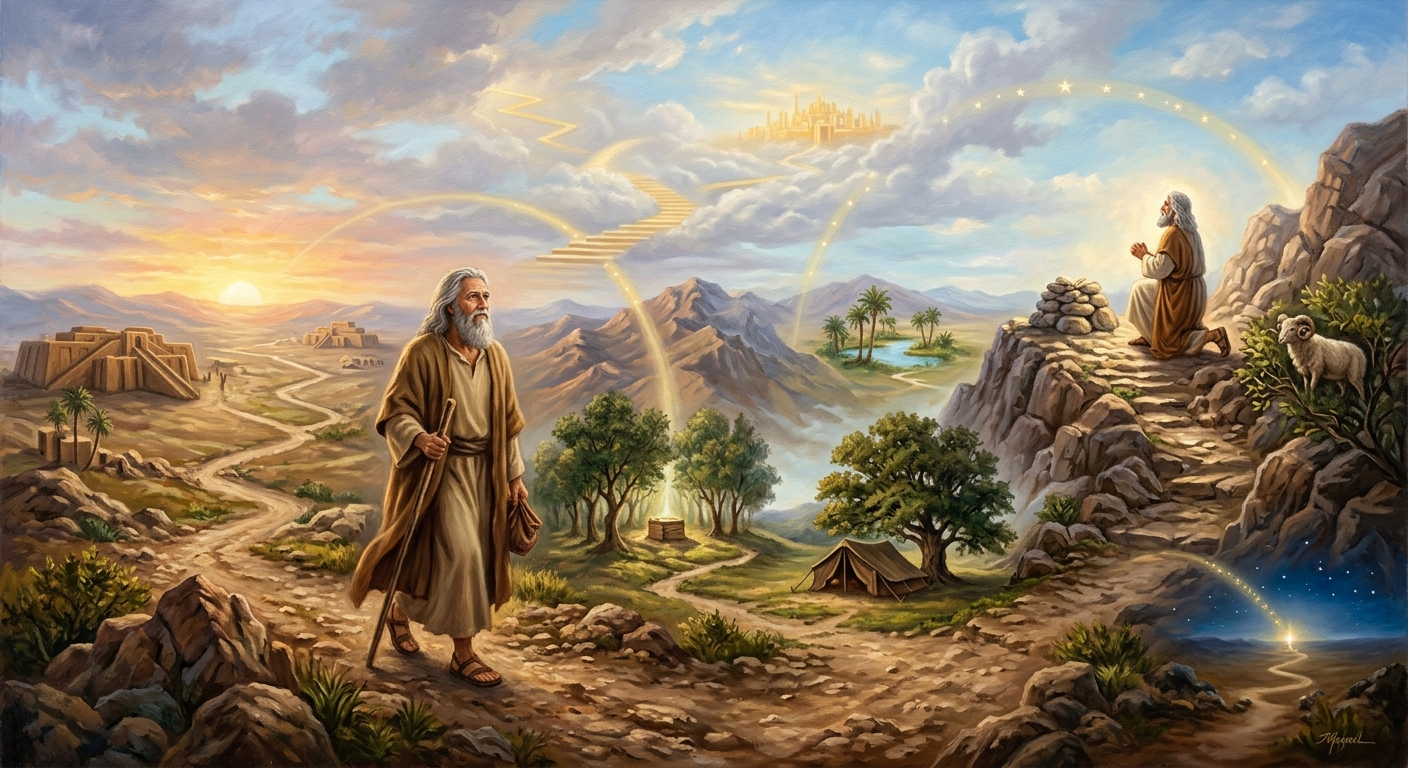
When God called Abraham to leave his homeland, he did not receive a complete map of the journey. He received a promise and a direction. Abraham set out without knowing all the details, but trusting the One who had called him. This is the first great lesson of his journey: authentic faith does not require seeing the entire destination; it requires trusting the voice that leads. The same movement is repeated in our lives when God calls us to leave behind familiar securities and walk toward what we cannot yet see.
About 25 years passed between Abraham's departure from Haran and the birth of Isaac. Throughout that interval, the narrative itself shows a man being shaped by experiences of faith, fear, failure, and new beginnings. The waiting is not presented as punishment, but as a place where character is matured. Not because the text explicitly says that God was working there, but because we see Abraham change, stumble, and learn. Divine delay does not mean that God has forgotten us. In the process, God can shape us, confront our self-reliance, and teach us to trust what we cannot control. God's timing is also part of the story of the promise.
At the heart of the story is a fundamental declaration: “Abraham believed the Lord, and it was credited to him as righteousness” (Genesis 15:6). He was not declared righteous because he had lived a perfect life, but because he believed the promise God had made to him. This faith was not an abstract belief, but a concrete trust in the word of the One who cannot lie. This is what Paul draws from in Romans 4: righteousness does not come through human merit, but through faith—a faith that, like Abraham's, holds on to the promise even when everything seems to contradict it.
There is also a decisive moment in the covenant. In Genesis 15, God passes alone between the pieces of the animals while Abraham sleeps. The act symbolizes that the fulfillment of the promise ultimately rested on the faithfulness of the One who had made it. This does not eliminate the requirement of human faithfulness, as we see in Genesis 17, but it shows that the ultimate fulfillment did not depend on Abraham's efforts to “produce” the heir. He could rest in the certainty that God would honor His own word.
The sharpest point of this journey comes in Genesis 22. God tests Abraham by asking him to offer Isaac as a burnt offering. The text does not reveal all of God's reasons, but it shows Abraham going up the mountain with a trust that had been forged through decades of walking with God. When Isaac asks about the lamb, Abraham answers, “God himself will provide the lamb” (Genesis 22:8). He did not know how or when, but he trusted that God would provide. And the ram appeared at the appointed moment—not as a formula such as “obey and God will act immediately,” but as a reminder that Abraham did not need to know God's means in advance in order to trust Him.
Finally, Abraham's life shows us that faith is not a straight line of right answers. He was afraid in Egypt, tried to solve things through his own means with Hagar, and repeated the same mistakes with Abimelech. But what makes him the father of faith was not perfection, but perseverance: continuing to believe even after stumbling, beginning again after every fall, and trusting God's word again when everything seemed to contradict it. Abraham did not begin as the man of faith we see in Genesis 22. He was formed along the journey. And this is the great message he leaves for all of us who walk with feet of clay, but with our eyes fixed on the God who never fails.
Abraham's life shows that faith does not mean never doubting, fearing, or making mistakes; it means continuing to learn to trust God throughout the journey.
For Memorization
“By faith Abraham, when called, obeyed and went to a place he would later receive as his inheritance, even though he did not know where he was going.” (Hebrews 11:8)